The pharmacy benefits landscape is changing for large employer groups and affecting all parties in the drug supply chain. Recent federal actions, such as the Federal Trade Commission’s investigation into Pharmacy Benefit Managers (“PBMs”) and Rebate Aggregators (detailed below), indicate an increasing scrutiny on PBMs, their routine abusive practices, and the impact they have on prescription drug costs. Plan Sponsors are uniquely positioned and key to helping reduce total drug spend and out of pocket expenses for their plan beneficiaries/employees. Plan Sponsors must be aware of common PBM tactics as well as the statutory law governing Plan obligations to employees. This three-part series offers Plan Sponsors valuable insights and five key action items to reduce total drug spend.
Plans should Carefully Analyze PBM use of Rebate Aggregators
Nowhere is PBM spread and PBM opacity more harmful to Plans than in connection with drug rebates. Pharmaceutical manufacturer rebates are supposed to be used to reduce the expense of prescription drugs for Plan Sponsors and beneficiaries. However, deceptive PBM contracting, and the use of PBM-owned Rebate Aggregators allow PBMs to retain undisclosed portions of rebates for their own profit rather than passing these savings through to the Plan. Rebate Aggregators routinely retain portions of these rebates before passing along the remaining funds to the PBM.
The Plan Sponsor contracting process itself often lacks transparency, with Plans not having direct contracts with the PBMs. Instead, the contract could be entirely between the Plan and the insurance company without the PBM or Rebate Aggregator being a party. Both PBMs and Rebate Aggregators are wholly owned by insurance companies. The Rebate Aggregators are “hired” by the PBM to negotiate rebates with drug manufacturers, presumably for the benefit of the Plan. By utilizing Rebate Aggregators, the insurance carrier and/or PBMs use opaque contract terms to withhold portions of rebates from Plans.
Plan Sponsors falsely believe that PBMs pass through 99 or even 100% of manufacturer rebates to the Plan Sponsor. PBMs are crafty, however, and often define “rebates” so narrowly and imprecisely, resulting in large portions of the compensation the PBM receives from manufacturers to never pass through to the Plan Sponsor. Certain fees, like bona fide service fees, administrative fees, data fees and formulary fees, that the PBMs receive from the drug manufacturer are regularly excluded from the definition of rebates. Those fees alone are 5% of the drug spend and Plans never see those dollars. Additionally, PBMs exclude 340B claims from being rebate eligible, further reducing the amount passed on to the Plans. The cure is better contracting.
PBMs use their wholly owned Rebate Aggregators to generate rebate revenue that is not disclosed to Plans. PBMs regularly include terms in contracts with Plan Sponsors that purport to pass-through 100% of manufacturer rebates. An example is: “PBM will pay the Plan 100% of rebates that PBM receives from a pharmaceutical manufacturer in connection with prescription drug products dispensed to beneficiaries under the Plan.” This misleading provision allows the Rebate Aggregator to retain significant portions of rebates. The PBM will pass through 100% of rebates the PBM receives, but actively conceals the rebates received by the PBM’s Rebate Aggregator. Rebate Aggregators are the entities that actually receive rebates directly from manufacturers. Further, as shown by the table below, because of vertical integration, Rebate Aggregators are often affiliated with PBMs and large health insurers, making it even easier for the PBM and Rebate Aggregator to keep the full extent of manufacturer revenue hidden from Plan Sponsors.
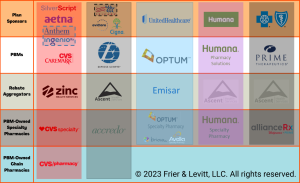
Plan Sponsors must demand transparent terms in their PBM contracts to prevent PBMs or their affiliated Rebate Aggregators from retaining portions of manufacturer rebates. Critically, because manufacturers often pay the highest rebates on high-cost drug products, like specialty medications, PBMs are incentivized to include the most expensive products on their prescription drug formularies. Consequently, when rebates are not fully passed through to Plans and beneficiaries, patients are left with artificially inflated out of pocket costs at the point of sale.
How Frier Levitt Can Help
Frier Levitt is at the forefront of federal and state efforts to combat PBM abuses. Our experienced attorneys collaborate with legislators at state and federal levels to shape legislation aimed at addressing PBM abuse for various industry stakeholders. Frier Levitt’s Plan Sponsor Practice Group has a proven track record of obtaining favorable results for health plans and plan sponsors in various areas, including, but not limited to, analyzing PBM contracts and initiating actions against PBMs to access Plan data to ensure PBM compliance or recover savings wrongfully withheld by the PBM. Contact us to learn more.